Curry Barker’s Obsession arrives as part of the ongoing resurgence of low‑budget horror, a movement proving that inventive filmmaking and sharp thematic focus can still pull audiences into cinemas. Made for roughly $1 million, the film is a testament to Barker’s resourcefulness and his willingness to push discomfort to the forefront. Beneath its seemingly supernatural premise lies a deeply human story about toxic masculinity, loneliness, and the dangerous fantasy of being owed affection. Barker’s background in Milk and Serial hinted at a filmmaker unafraid of awkwardness and unease; Obsession confirms it.
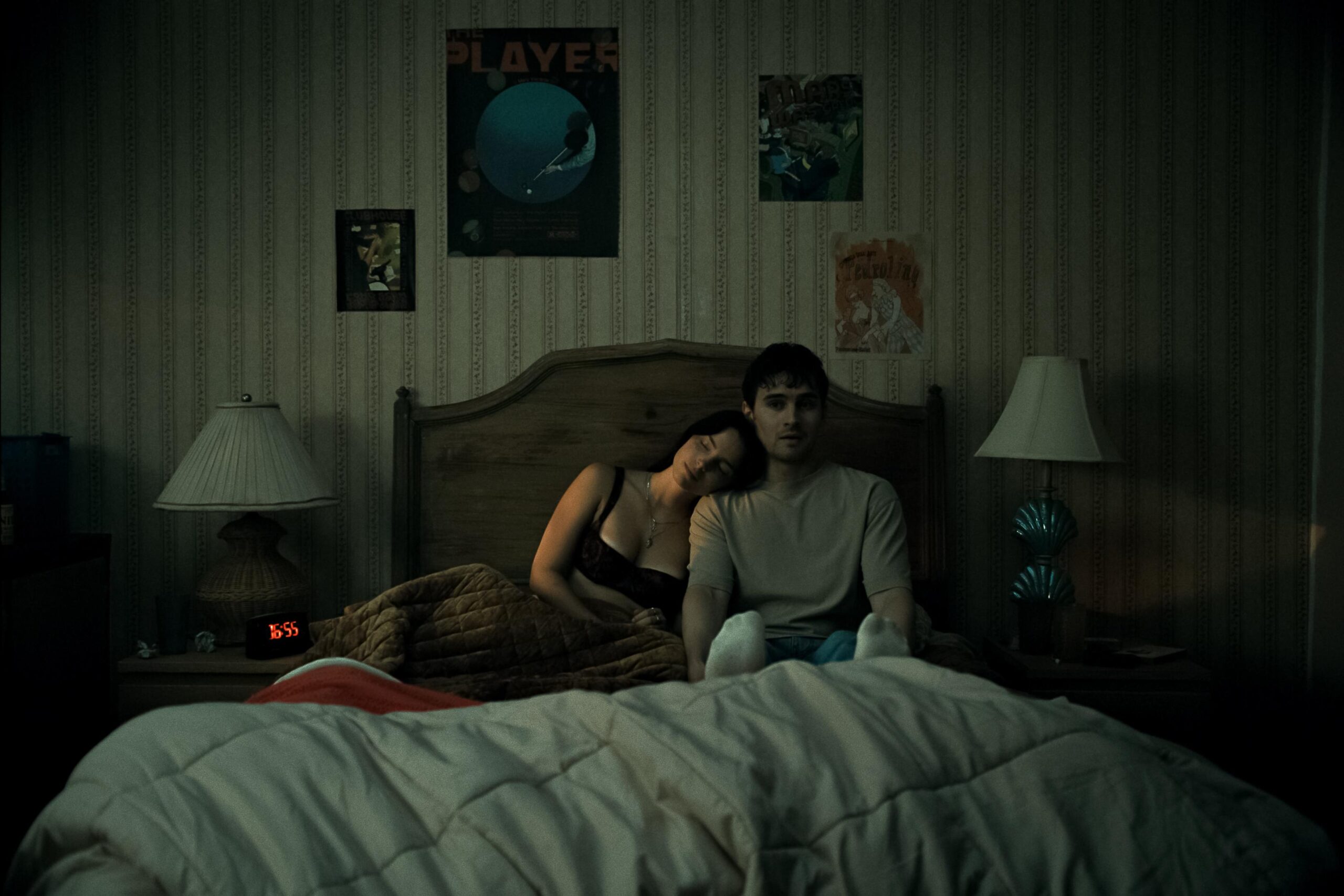
The story centres on Bear (Michael Johnston), a socially anxious young man living in his late grandmother’s house with only his cat for company. His world is small, quiet and isolating. When he makes a wish on a “One Wish Willow” novelty product, it is borne of desperation, frustration and a yearning to be seen. It brings his crush Nikki (Inde Navarrette) into his life in an unnervingly literal way, the film shifts from melancholy character study to escalating nightmare.
Michael Johnston delivers a strong performance as Bear, opening the film with a quiet, aching vulnerability. He wears his social anxiety like a security blanket: shoulders hunched, gaze lowered, movements small and hesitant. Johnston ensures we begin the film feeling sorry for him. He is lonely, awkward, overshadowed by his more confident friend Ian (Cooper Tomlinson). His desperation feels recognisable, even sympathetic. That relatability is precisely what makes the film’s moral ambiguity so uncomfortable – Barker wants us to sit with the question of whether a “nice guy” can still cause profound harm.

Inde Navarrette, meanwhile, is earning her reputation as horror’s next breakout star. Her performance as Nikki is astonishingly physical and emotionally volatile. She shifts tone mid‑sentence, her posture snapping from soft to rigid in an instant. She moves with an uncanny, animatronic precision, embodying the unsettling idea of a dream girl brought to life. One of the film’s most chilling moments comes when Bear leaves for work and Nikki freezes into a grotesque rictus grin. Barker holds the shot, letting her face tighten to the point of near rupture before slowly panning down to reveal she will stand there, waiting, all day. Navarrette makes Nikki terrifying, pitiable and heartbreakingly trapped in the same fantasy that ensnares Bear.
Barker’s direction is defined by patience. He favours lingering takes and wide shots that force the audience to absorb the tension rather than escape it. A slow pan across a car park or a silent bedroom becomes more unsettling than any jump scare. When violence does erupt, it is shocking precisely because Barker has trained us to fear the quiet. His visual language mirrors the emotional arc of the relationship. Early scenes glow with soft sunlight – breakfasts together, cosy date nights, a montage of domestic bliss. But as Nikki’s behaviour intensifies, the framing tightens, the colour palette cools, and the house begins to feel like a cage. Barker understands that horror thrives not only in what is shown but in what is allowed to fester.
At its core, Obsession is a film about abusive relationships and the cultural narratives that enable them. Bear and Nikki’s dynamic mirrors real‑world cycles of control: the honeymoon phase, the escalating demands for time and attention, the threats of self‑harm, the emotional suffocation. It is frightening because it is recognisable. The film’s most disturbing turn arrives in a single, sharp cut to Bear and Nikki having sex – a moment that reframes the entire dynamic and forces the audience to confront who is the victim, who is the villain, and whether those roles can even be separated.

Barker’s most provocative choice is refusing to let the audience fully absolve Bear. He is lonely. He is hurting. His wish is born from longing, not malice. And yet the consequences are catastrophic. The film argues that toxic masculinity harms everyone; those who wield it and those caught in its path. Bear’s entitlement to affection, even when framed as sadness, becomes a destructive force. Nikki, created to fulfil his desire, becomes the clearest victim of it. This thematic complexity gives Obsession a contemporary resonance. It speaks to conversations about parasocial relationships, “nice guy” narratives and the societal discomfort around acknowledging that vulnerability and harm can coexist in the same person.
Obsession is a deeply unsettling film, not because of its supernatural elements, but because of its emotional honesty. Barker crafts a horror story fuelled by two exceptional performances and a willingness to confront uncomfortable truths. It is a film about longing, loneliness and the dangerous belief that love can be earned through desperation. Barker has created something that gets under your skin and will leave you feeling every bit as bloody and bruised as the characters on screen.
Obsession is now in UK cinemas.

- Pressure – Review - September 12, 2026
- Backrooms – Review - May 31, 2026
- Obsession – Review - May 25, 2026