No other choice. It’s a phrase that’s repeated throughout Park Chan-Wook’s film of the same name. It’s said by US executives fleeing to their limos; grey suited interview panels discussing slimmed down workforces and the use of AI; and our central character, as he takes his desperation for employment to extreme measures. This is a film that is part biting satire, part farce and part tragedy. The system – whatever that may be – is as broken as our leading man.
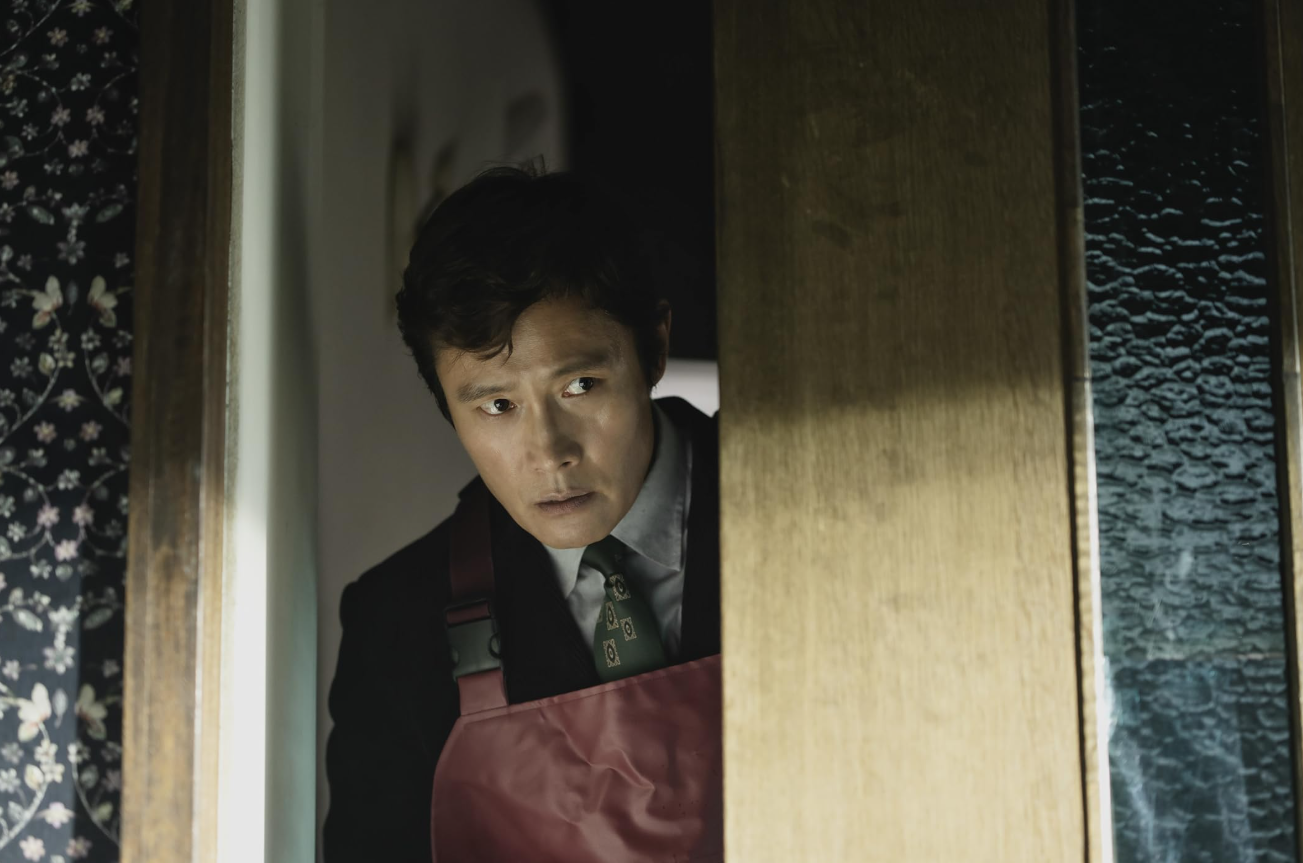
Man-su (Lee Byung-hun) seems to have it all. A steady job at a local paper factory. A doting wife. A child prodigy. His dream house. A couple of dogs. We first meet him as he barbecues eels for a family lunch; a note of thanks sent from his employers for all his hard work. But, quickly, he soon finds himself on the receiving end of a redundancy notice, despite winning Pulp Man of the Year, and his life is turned upside down. No more dance classes. No more meat for dinner. No more sparkling socialite wife. Instead, he is forced to compete in interview after interview; CV after CV. And the times, as the song goes, they are a-changing. Local factories need less and less workers as they implement AI tools to do the work of many men. Desperate, and on the brink of losing it all, Man-su decides to eliminate his workplace competition. Literally.

The lead performances anchor the film with an emotional intensity that never feels forced. Lee Byung-hun delivers something so physical, so palpable, that it becomes impossible not to absorb his character’s desperation. Man-su’s panic and shame are not unique within the world of the film (unemployment is seemingly everywhere, and everyone is struggling) but Lee makes us feel his particular strain with startling clarity. His body seems to carry the weight of every bad decision, every missed opportunity, every fear about the future. Opposite him, Son Ye-jin brings a very different but equally affecting energy. As Miri, she opens the film with a lilting, sing-song voice, perfectly styled hair and an air of bright optimism. She seems almost buoyant. Yet as the story progresses, that brightness dims. Her hair becomes unkempt, her cardigans grow oversized, and she is pushed into working for the very people she once socialised with. Her decline is visual, emotional, and deeply human. Together, their fall from grace feels heavy; burdensome in a way that lingers.
Park Chan-Wook’s direction amplifies this emotional descent with a kinetic, restless style. He uses sudden close-ups and abrupt zoom-outs to underline the seriousness, or, at times, the absurdity, of a moment. There are scenes where Man-su is framed with almost painful precision, sweat beading on his brow or tears threatening to spill as he weighs his dwindling options. These intimate shots force us into his internal world, making his turmoil unavoidable. Yet Park also leans into farce, allowing the film to breathe. A three-way scuffle over a gun devolves into bodies rolling across the floor in a chaotic tangle, and the therapy workshops for the newly unemployed feel more than a little ridiculous. This tonal elasticity is part of what makes the film so compelling. Park’s script blends family drama with dark comedy so seamlessly that the two become inseparable; the humour sharpens the tragedy, and the tragedy gives the humour its bite. The complexities of human existence – fear, pride, shame, love – are laid bare for us to sift through.

The story, adapted from Donald E. Westlake’s novel The Ax, feels painfully relevant. When Man-su begins investigating the people who might compete with him for a job, he finds them in states of quiet collapse: men numbing themselves with alcohol, men trapped in commission-based retail jobs that offer neither dignity nor stability. Their desperation mirrors his own. These are individuals who can barely meet another person’s gaze, terrified that their failure is visible, as obvious as a stain on their clothing. They are traditional breadwinners suddenly stripped of purpose, left with little more than the hollow echo of what their lives used to be. The film has a great deal to say about class, economic precarity and the modern workforce: how quickly one can fall, how brutally society responds to that fall and how little support exists to catch those who slip. Even the ending carries a bittersweet inevitability. You sense what is coming long before it arrives, and that dread is part of the film’s power.
The score, composed by Cho Young-Wuk, adds another layer of emotional resonance. It is simple but quietly beautiful, built on dreamlike piano motifs and deep, weighty cello strokes. The music never overwhelms the scenes; instead, it threads through them with a gentle persistence, enhancing the film’s melancholy without drawing attention to itself. Cho has crafted something memorable yet unobtrusive.
No Other Choice is a visceral, turbulent, compelling film that completely absorbs you into its world. Park Chan-Wook delivers another incredible work of cinema, underlined by Lee Byung-hun’s precise, emotional and empathetic character study.
No Other Choice is in UK cinemas now.

- Pressure – Review - September 12, 2026
- Backrooms – Review - May 31, 2026
- Obsession – Review - May 25, 2026